
Every outboard sold in the United States is built to survive salt water. None of them is built to ignore it. The difference between an engine that reaches two thousand hours and one that dies at six hundred is almost never the brand on the cowling. It is what happened to it between trips.
In Fort Lauderdale that matters more than almost anywhere else, because boats here run year round in warm salt water and rarely get the long cold layup that gives engines elsewhere an accidental rest.
Salt Does Not Evaporate
When you pull the boat out and the water dries, the salt stays. It sits as crystals in every place water reached, and warm humid air keeps those crystals damp enough to keep working. That is the part owners underestimate. Corrosion is not something that happens while the engine is running. It happens on the trailer, at the dock, and in the driveway, quietly, for weeks.
Salt attacks in three ways at once. It corrodes aluminium directly, which is what most of an outboard is made of. It creates galvanic activity anywhere two different metals meet, which is every bolt, every fitting and every fastener on the engine. And it holds moisture against surfaces that would otherwise dry, which accelerates everything else.
Where It Shows Up First
The cooling passages are usually first, and they are the ones you cannot see. Salt builds up inside the water jackets that run through the powerhead, narrowing them slowly. Salt does the same slow work lower down the leg, which is covered here on water getting into the lower unit. Nothing feels wrong for a long time. Then one day the engine runs hot on a long run, and by the time the alarm sounds the damage that caused it has been developing for two or three seasons.
The thermostat and the pressure relief valve are next, for the same reason. Both are small, both live in the cooling circuit, and both stick when salt accumulates around them.
The water pump impeller is a wear item regardless, but salt shortens its life considerably. A tired impeller is the most common cause of why outboards overheat. A hardened or shredded impeller stops moving enough water, and everything downstream of it gets hotter than it should.
Externally, salt shows up as white powder around fasteners, bubbling under paint, and seized bolts. A seized bolt is not just cosmetic. It is the reason a straightforward repair turns into an expensive one, because a fastener that snaps off inside a powerhead has to be extracted before anything else can proceed.
The Damage That Ends Engines
Overheating is what actually kills powerheads, and salt is what causes most overheating.
When an engine runs hot enough for long enough, cylinder walls score, pistons expand beyond their clearances, and head gaskets fail. At that point you are looking at a rebuild or a replacement powerhead, and either one costs a meaningful fraction of what the whole boat is worth.
The frustrating part is that almost none of it is sudden. A powerhead that fails from overheating in year six was accumulating salt in its cooling passages from year two. The failure is the last event in a long chain, not the first.
What Salt Water Does to an Outboard Powerhead
Salt water corrodes an outboard from the inside out. Salt crystals remain in the cooling passages after every trip, gradually restricting water flow through the powerhead, while galvanic corrosion attacks fasteners and aluminium castings between uses. The end result is overheating, which scores cylinders and fails head gaskets. Flushing after every salt trip is the single most effective prevention.
Flushing Is Not Optional and Most People Do It Wrong
Flushing after every salt water trip is the highest return maintenance action an owner can take, and it costs nothing but time.
Run fresh water through the engine using the flush port or muffs until the water coming out is running clear and cool, and give it long enough to actually displace what is in there. Sixty seconds is not a flush. Several minutes is. Do it after every trip, not every third trip, and do it the same day rather than the following weekend, because the salt starts working immediately.
Rinse the exterior too, including under the cowling where spray reaches, and leave the engine in the down position long enough to drain fully. Water trapped in a lower unit that was left tilted is water sitting against components that would rather be dry.
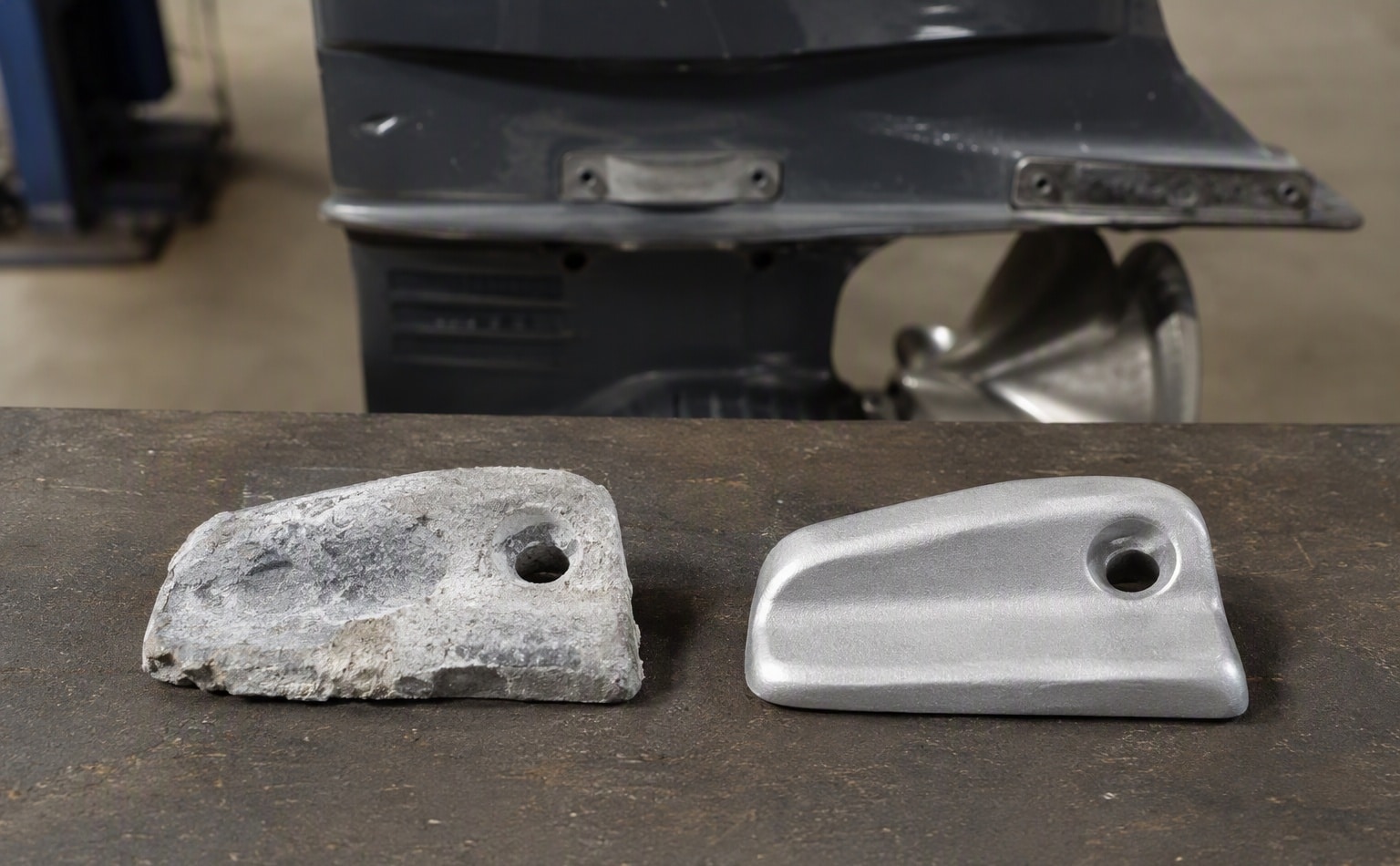
What Anodes Actually Do
Every outboard carries sacrificial anodes, and they exist to be destroyed. They corrode so that your powerhead, gear case and trim components do not.
An anode that still looks new after two seasons in salt water is not good news. It usually means it is painted, corroded at its mounting point, or otherwise not making electrical contact, which means it is protecting nothing. An anode that has wasted away to half its size is doing exactly what it should and needs replacing.
Checking anodes takes a minute and is the cheapest insurance on the engine. Most owners in South Florida should be replacing them annually, and boats kept permanently in the water often need them sooner.
What an Assessment Actually Looks At
Owners often assume checking a cooling system means pulling the powerhead apart. It does not.
A useful assessment starts with running pressure and temperature under load, because a restriction that is invisible at idle shows itself when the engine is working. The telltale stream gets measured rather than glanced at. The thermostat and pressure relief valve come out and get inspected, since both are cheap, both are common failure points, and both tell you a great deal about what is happening deeper in the block. The impeller housing gets opened, because a worn impeller and a salted housing usually appear together.
From those four checks it is normally clear whether you are looking at routine maintenance, a restriction that needs flushing chemically, or genuine internal damage. Only the third case requires anything invasive, and knowing which case you are in is what stops owners spending on the wrong work.
The Boats That Suffer Most
Three patterns account for most salt damage we see.
Boats kept in a slip year round, because they never leave the water and never get a proper rinse. Boats used infrequently, because salt sits undisturbed for months at a time. And boats bought second hand without inspection, where the previous owner’s flushing habits are entirely unknown and the internal condition of the cooling system is a genuine unknown.
If you fall into any of those three, an internal cooling assessment is worth doing before a hot summer run rather than after one.
A Simple Habit That Works
The owners whose engines last are not doing anything complicated. They have one habit: the boat does not get put away until it has been flushed and rinsed. Not later, not tomorrow, not next weekend. That single rule prevents more expensive damage than every other maintenance decision combined, because it stops the corrosion cycle before it starts each time.
Everything else on this page is a refinement of that one habit.
What to Do Now
Flush after every trip, properly and for long enough. Check anodes at least twice a year. Watch the telltale stream every time you start, because a weak or interrupted stream is the earliest warning you will get. And if the engine has ever run hot, even once, have the cooling system assessed rather than hoping it was a one off.
If you want the cooling system checked without hauling the boat out, our outboard motor repair fort lauderdale service comes to the dock or the driveway. Call (305) 282-5283.