
The lower unit is the part of your outboard that lives underwater permanently, and it is sealed against the ocean by a handful of rubber seals about the size of a wedding ring. When those seals fail, salt water gets into the gear case, and what happens next is entirely predictable and entirely preventable.
Lower unit failures are among the most expensive repairs on an outboard, and they are almost always caught late. Not because the warning signs are subtle, but because owners do not know where to look.
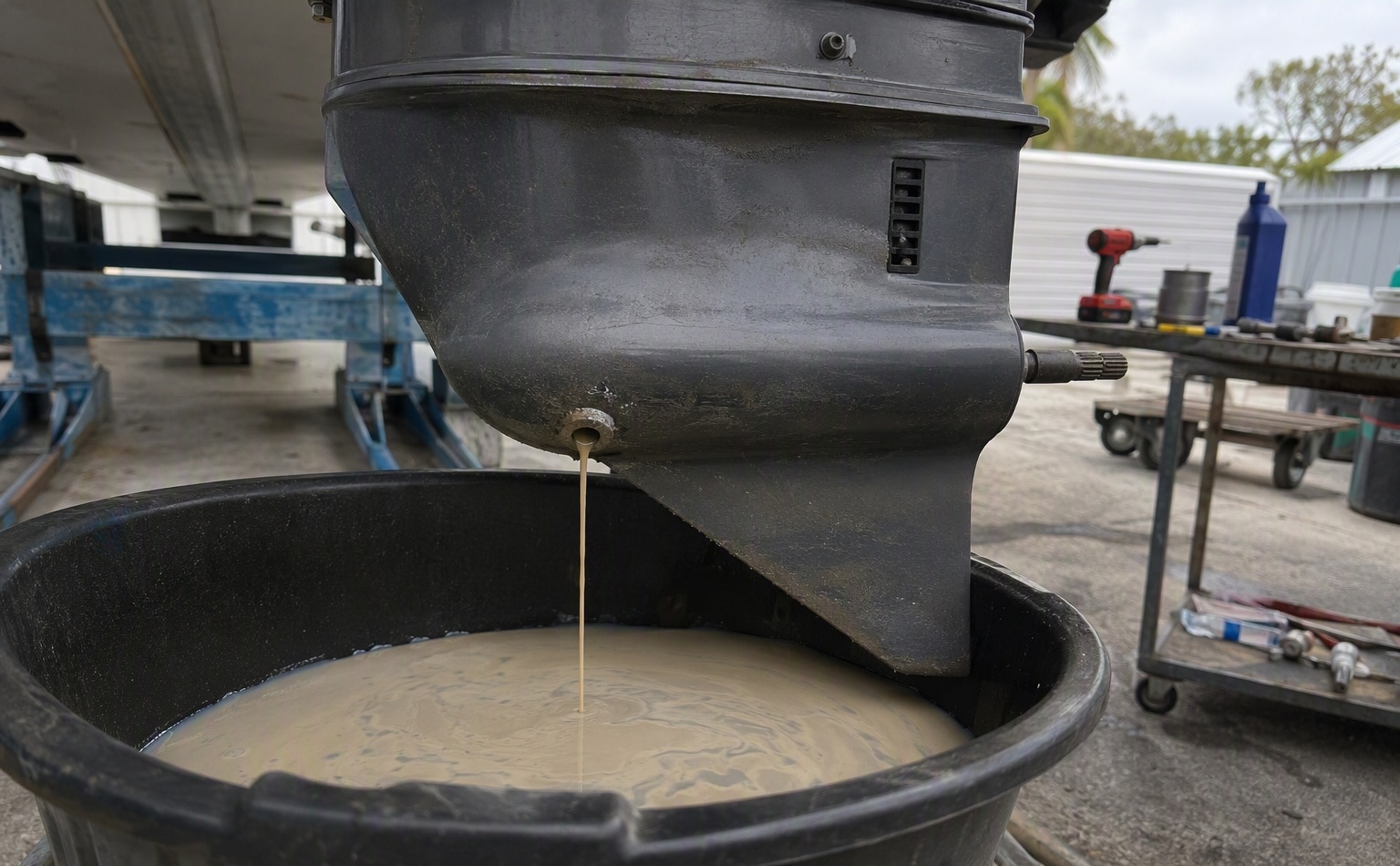
The Gear Lube Tells You Everything
The single most useful diagnostic on your entire engine costs nothing and takes five minutes: look at the gear lube. It pairs with what a compression test tells you about a used boat, which is the other five minute check worth doing before you buy.
Healthy gear lube is clear, and depending on the brand it is amber, green or blue. It smells strongly, it pours cleanly, and it looks like oil.
Gear lube with water in it looks like coffee with milk in it. That milky, opaque, light brown or grey appearance is water emulsified into the oil, and there is no innocent explanation for it. Water is getting in, which means a seal has failed, and every hour the engine runs after that point does more damage. The mechanism is the same one described in how salt water attacks an outboard.
There is a worse version. If the lube is milky and you also find metallic glitter in it, the water has already been in there long enough to damage bearings and gear teeth. At that stage you are past a seal replacement.
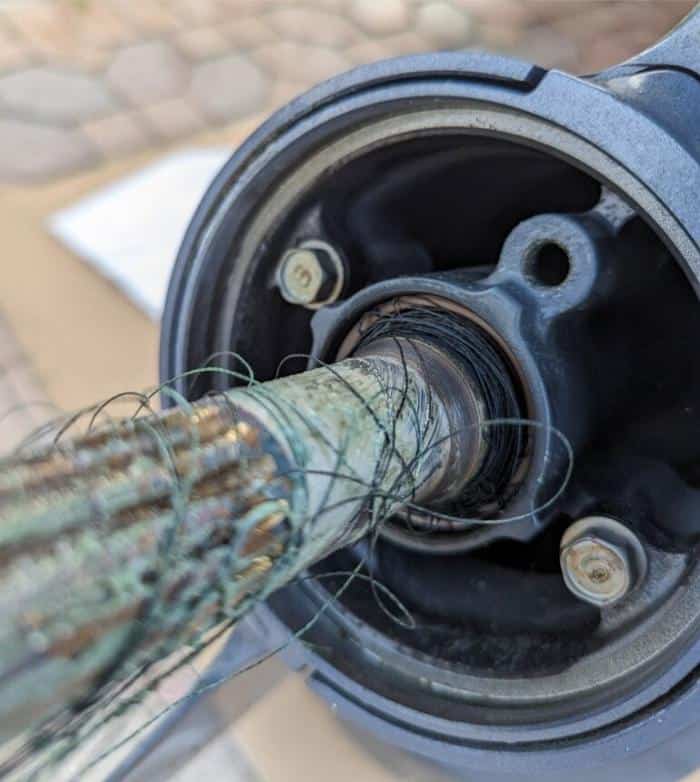
Where the Water Gets In
There are four common entry points, and they fail for different reasons.
The propeller shaft seal is the most common, and fishing line is the most common cause. Line wraps around the shaft behind the prop, works its way into the seal, and cuts it. This is why checking behind the propeller matters and why anybody who fishes should do it regularly.
The shift shaft seal sits at the top of the gear case and fails from age and heat rather than damage.
The driveshaft seal, also at the top, fails the same way.
The gear case housing itself can be the problem if the unit has struck something. A hairline crack from a grounding or a hit on a submerged object may not be visible and may not leak until the case is under pressure and temperature.
Signs Your Lower Unit Is Taking On Water
The clearest sign is milky, light brown or grey gear lube, which means salt water has emulsified into the oil through a failed seal. Other indicators are gear lube above the full level, difficulty shifting, whining or grinding from the lower unit, and fishing line wrapped behind the propeller. Milky gear lube means stop running the engine and address it immediately.
The Other Warning Signs
Overfull gear lube is a sign most owners miss entirely. The gear case holds a fixed volume. If the level is above where it should be and nobody added any, something else got in, and that something is water.
Shifting problems point at the shift shaft. If engaging forward or reverse has become notchy, delayed, or requires more effort than it used to, that shaft and its seal are worth inspecting.
Noise matters. A whine that changes with speed, a grinding under load, or any new noise from below the waterline should be treated as urgent. Gears that are running in contaminated lube do not stay quiet for long.
Fishing line behind the prop is a warning even if everything else seems fine. Pull the prop and look. If line is wrapped on the shaft, the seal behind it has been under attack, and finding it before the lube goes milky is the whole point.
Why This One Cannot Wait
Most outboard problems tolerate a little delay. This one does not.
Salt water in a gear case does two things at once. It strips lubrication from gears and bearings that were designed to run in oil, and it corrodes the metal surfaces directly. A lower unit that would have needed a seal kit and a lube change in week one needs bearings and gears by week six, and a complete replacement unit not long after.
The cost difference between those outcomes is large enough that it is worth checking gear lube more often than any schedule requires. Twice a season is reasonable. Before and after any trip where you might have picked up line is better.
What to Do If the Lube Is Milky
Stop running the engine. Every hour after the discovery adds damage.
Do not simply drain it and refill it and carry on. The failed seal is still failed, and fresh lube will be contaminated within a trip or two. Draining and refilling without fixing the cause is how a seal repair turns into a rebuild.
Note how much came out and what it looked like, because that information helps whoever assesses it. Check behind the propeller for line while you are there.
Then have the unit pressure tested. A pressure and vacuum test finds the leak precisely rather than by guesswork, and it tells you whether you are dealing with one seal or a cracked housing. Those two outcomes have very different costs and it is worth knowing which one you have before any parts are ordered.
The Pre-Purchase Angle
If you are buying a used boat, the lower unit is where undisclosed problems hide, and gear lube is the fastest tell.
We surveyed a 2022 outboard cruiser for a buyer recently and stopped the survey early because the boat was not in a condition to sea trial. That saved him the cost of continuing, and it saved him considerably more than that in what he did not buy. A lower unit inspection is a small part of a survey and frequently the part that changes the decision.
Anybody buying a used outboard boat in Florida should pull the gear lube drain plug before money changes hands. A seller who objects to that has told you something useful.
What a Pressure Test Involves
Owners hear pressure test and imagine the lower unit coming off and going to a workshop for a week. In practice it is far less involved than that.
The gear case is drained, sealed at its openings, and pressurised with air to a low specified pressure, then held and monitored. A case that holds pressure is sealed. A case that bleeds down has a leak, and the rate tells you roughly how bad. The vacuum half of the test catches leaks that only open under negative pressure, which is how some prop shaft seals behave.
From there the leak gets located, usually by watching where bubbles form with the unit submerged. That points at exactly which seal has failed, or reveals a housing crack if the leak is not at a seal.
The whole procedure is measured in hours, not days, and it can be done at the boat. What it buys you is certainty about scope before anybody orders parts, which on a lower unit is the difference between a seal kit and a four figure rebuild.
Prevention Is Mostly Habit
Check gear lube at least twice a season and any time the engine has been in an area with fishing line in the water. Inspect behind the propeller when you check it. Replace seals proactively at major service intervals rather than waiting for failure. And treat any grounding, however minor, as a reason to inspect the case rather than assume it survived.
If you want the lower unit pressure tested without hauling the boat, our outboard motor repair fort lauderdale service does it at the dock. Call (305) 282-5283.