
Ask ten boat owners which is cheaper to run and you will get ten confident answers, most of them wrong. The two stroke versus four stroke question gets argued on internet forums using purchase prices and fuel burn, and almost never using what the engines actually cost their owners over a decade.
The honest answer is that they cost differently rather than one costing less, and which one suits you depends on how you use the boat rather than which is objectively better.
The Routine Work Is Not Comparable
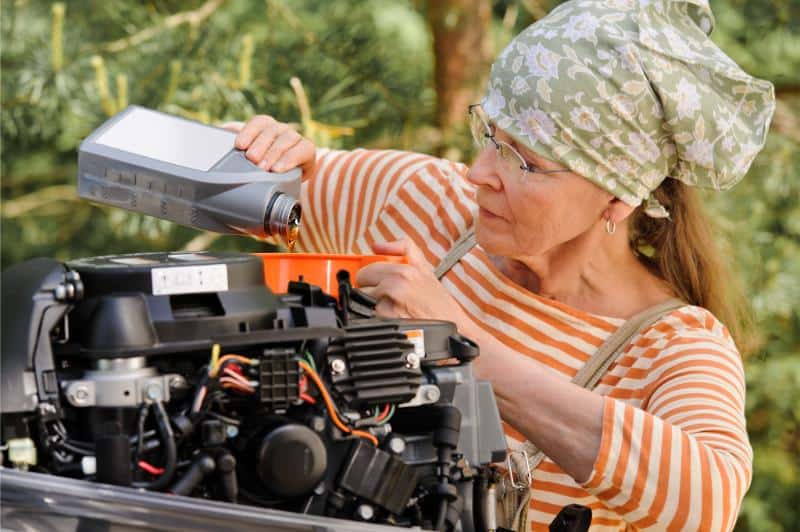
A four stroke has an engine oil system. That means oil and filter changes on a schedule, and it means oil condition is something to monitor. Oil is only half of it; the other half is what ethanol fuel does between uses. In Florida heat that oil degrades faster than the manual assumes, which pushes real intervals shorter than the printed ones.
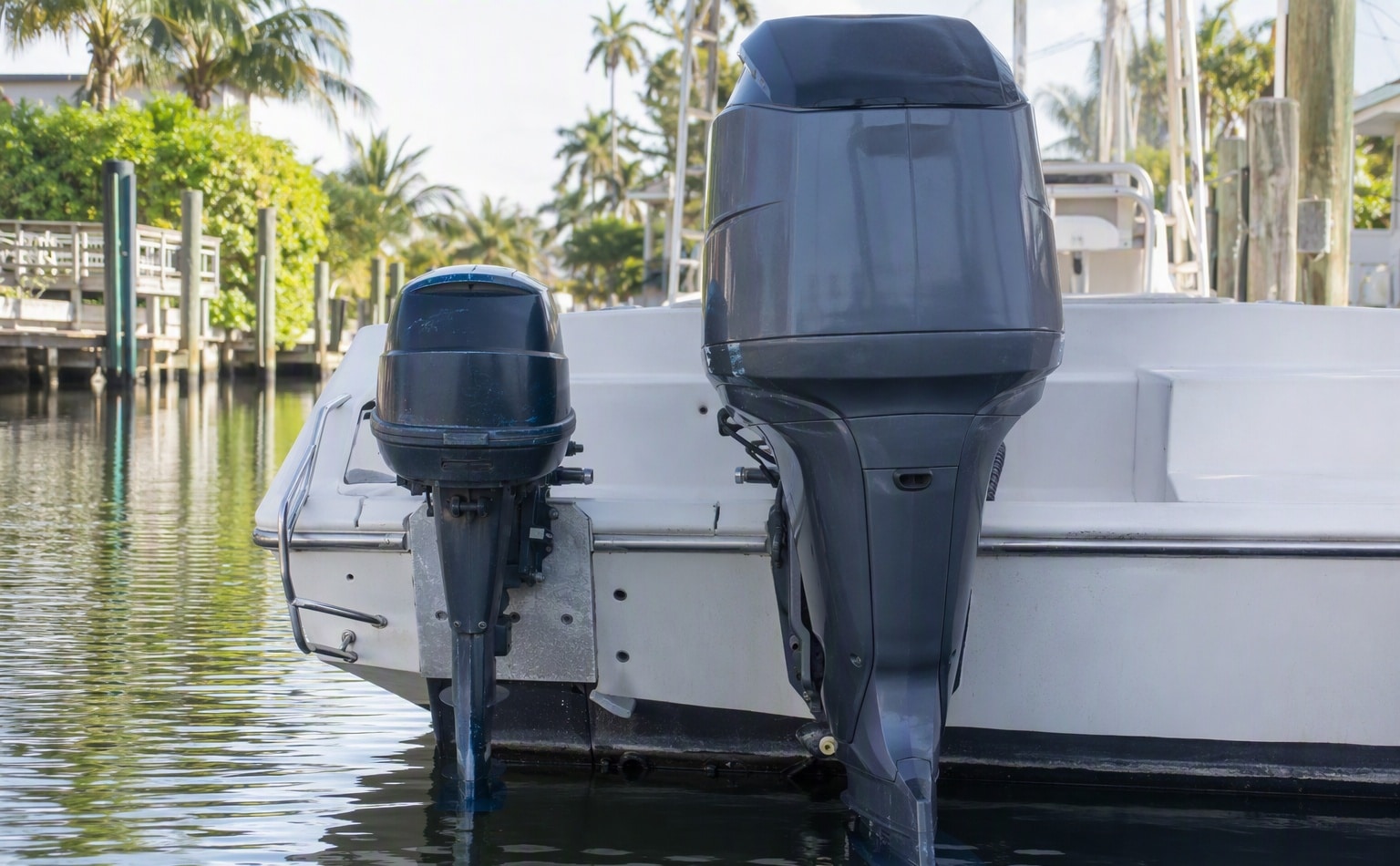
A two stroke has no crankcase oil to change, because oil is delivered with the fuel or injected. That removes an entire maintenance category, and it is the source of the widespread belief that two strokes are cheaper to keep.
What replaces it is oil consumption. A two stroke burns oil continuously, and that is a running cost that never stops. Either way the bigger variable is the servicing interval that applies in Florida. Over a season of real use, oil purchases on a two stroke can approach or exceed what a four stroke owner spends on scheduled oil changes.
The shared items are identical on both: gear lube, impellers, plugs, anodes, fuel filters and thermostats. Those are the bulk of routine servicing on either type, and neither design has an advantage there.
Two Stroke and Four Stroke Upkeep Compared
Four strokes require scheduled oil and filter changes but consume no oil in normal running. Two strokes eliminate oil changes but burn oil continuously as a running cost. Gear lube, impellers, plugs, anodes and filters are identical on both. Four strokes have more components that can fail; two strokes wear faster internally.
Where the Real Money Is
Routine servicing is the small number on both. The large numbers come from the failures, and the two designs fail differently.
Four strokes carry more complexity. Valves, camshafts, timing components, oil pumps and more elaborate electronics all exist and all can fail. When a four stroke has a serious problem it is frequently expensive to diagnose as well as to fix, because there is more to eliminate.
Two strokes are simpler and there is less to go wrong. What they do instead is wear. Higher combustion temperatures and a lubrication method that depends on fuel mixture mean cylinders and rings wear faster than on an equivalent four stroke. A two stroke reaching high hours is usually closer to needing internal work than a four stroke at the same figure.
Both are destroyed by the same two things regardless of design: overheating and water intrusion. Neither type has any advantage there, and those are the failures that produce the largest bills.
The Factor Nobody Prices
Neglect costs more than either design.
A four stroke that gets its oil changed and its cooling system looked after will outlast a two stroke that does not, and the reverse is equally true. Across every engine we see, maintenance history predicts condition far more reliably than which type it is.
Two identical engines with the same hours can be in completely different shape depending on whether they were flushed after salt trips, whether fuel was managed during layups, and whether anyone checked gear lube. Those three habits swamp the design difference entirely.
Parts and Availability
This is worth thinking about on older engines, because the market has moved.
Four strokes dominate current production, so parts availability for recent four strokes is excellent and likely to remain so.
Older two strokes, particularly discontinued lines, are a more mixed picture. Some remain very well supported. Others require more patience and occasionally cost more to source, and that matters when a boat is out of use waiting.
If you are buying used, availability of parts for that specific engine is worth ten minutes of research before you commit.
Fuel, Since Everyone Asks
Four strokes are meaningfully more efficient, particularly at cruise and at idle. For high hour users that difference accumulates into real money over a season.
For an owner running fifty hours a year the fuel difference is modest, and it is not the number that should drive the decision. Purchase price, weight, noise, and the condition of the specific engine in front of you all matter more at that usage level.
Choosing Between Them Honestly
Buy a four stroke if you run a lot of hours, want quieter and cleaner operation, plan to keep the boat long term, and will actually follow a service schedule.
Buy a two stroke if weight matters on your hull, you prefer mechanical simplicity, you want lower purchase cost, or the specific engine available to you is in genuinely good condition.
In either case, buy the best maintained example you can find rather than the type you decided on in advance. A well kept engine of the type you did not prefer will cost you less than a neglected one of the type you did.
What Ten Years Actually Looks Like
It helps to put rough shapes on this rather than argue in the abstract.
Over a decade of moderate use, a four stroke owner who follows the schedule spends steadily: an annual service every year, impellers on interval, gear lube, plugs, anodes, and one or two unscheduled repairs somewhere in the middle years. The spending is predictable and none of it is alarming individually.
A two stroke owner over the same decade spends less on scheduled servicing and more on oil continuously, with the same impellers, gear lube, plugs and anodes. The difference tends to arrive later, in the form of internal wear surfacing as reduced compression somewhere past the midpoint.
Neither profile is obviously cheaper. The four stroke spreads cost evenly and front loads the purchase. The two stroke costs less to buy and concentrates its bill nearer the end of its life. Which suits you depends heavily on how long you intend to keep the boat.
The Resale Question
There is one asymmetry worth knowing about, and it is not mechanical.
The used market currently prices recent four strokes more strongly than comparable two strokes, partly because of buyer preference and partly because of parts availability expectations. If you plan to sell within a few years, that difference is real money and it does not appear in any maintenance calculation.
If you intend to keep the boat until the engine is finished, resale is irrelevant and the calculation returns to condition and habits.
What This Means Practically
Budget for routine servicing annually on either type. It is the smallest number in this discussion and the one that controls all the others.
Flush after every salt trip, manage fuel during layups, and check gear lube twice a season. Those habits apply identically to both designs and prevent the failures that actually cost money.
And when comparing two boats, compare the condition and history in front of you rather than the design philosophy. The engine that was looked after is the cheaper engine, every time.
If you want an honest assessment of what a specific engine will need, our outboard motor repair fort lauderdale service inspects at the dock. Call (305) 282-5283.